Ditch the Data Overload: 5 Fitness Trackers That Give You Numbers You'll Actually Use
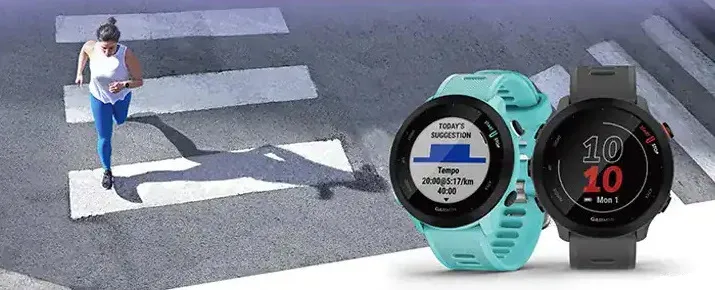
Photo: Shlenderkumar, CC BY-SA 4.0, via Wikimedia Commons
Somewhere along the way, fitness trackers stopped being about fitness and started being about features. Today's wearables will tell you your blood oxygen, your skin temperature, your stress score, your readiness index, your body battery, your sleep stages, and — in some cases — whether Mercury is in retrograde (okay, not that last one, but give it a year). The problem is that most people check their tracker for about three weeks, feel overwhelmed by the data, and eventually forget to charge it.
The real question isn't which tracker has the most metrics. It's which tracker gives you information you'll actually act on.
We spent time with five popular wearables across different fitness levels — from casual walkers to people training for half-marathons — and evaluated them not by spec sheets but by one simple standard: did the data make you healthier or just more anxious? Here's the breakdown.
The Problem With "More Is More" Fitness Data
Before we get into the rankings, it's worth naming the thing nobody in fitness tech marketing wants to talk about: metric overload is real, and it's actively unhelpful for most users.
Studies on behavior change consistently show that people respond better to simple, actionable feedback than to complex dashboards. Telling someone their HRV dropped 12 points overnight is meaningless unless they know what HRV is, why it matters, and what they should do about it. Telling someone they slept five hours and should skip the intense workout today? That's actionable.
We ranked these trackers by how well they translate data into decisions — not by how many sensors they cram into the band.
1. Garmin Forerunner 265 — Built for People Who Actually Train
Garmin has always been the choice for serious athletes, and the Forerunner 265 makes a strong case that it's also the choice for anyone who wants to improve, not just monitor. The standout feature is Garmin's Training Readiness score, which pulls together sleep quality, HRV, recent workout load, and recovery time into a single, genuinely useful number that tells you how hard to push today.
The GPS accuracy is exceptional — better than most competitors at this price point — which matters if you're a runner or cyclist who actually cares about pace and distance. The AMOLED display is bright and easy to read outdoors. Battery life runs around 13 days in smartwatch mode, which is competitive for a full-color display device.
The app (Garmin Connect) has a learning curve, but it rewards the time investment. This isn't a tracker for someone who wants to glance at their wrist and feel good. It's for people who want to genuinely get better at something physical.
Best for: Runners, cyclists, and anyone with specific performance goals.
2. Whoop 4.0 — The Recovery Tracker That Changed How We Think About Rest
Whoop is polarizing because it doesn't have a screen. At all. No steps displayed, no time, no notifications — just a band that quietly collects data and delivers insights through its app. For some people, that's a dealbreaker. For others, it's exactly the point.
The Whoop 4.0 is arguably the best recovery-focused tracker on the market. Its strain and recovery metrics are built around the idea that rest is as important as effort, and the app does a remarkable job of communicating that in plain language. You'll know when you're under-recovered, when you're primed to push hard, and — crucially — how your sleep quality is impacting your performance.
The subscription model ($30/month or cheaper on annual plans, with the device included) isn't for everyone. But if you're serious about optimizing training and recovery, the data quality justifies the cost.
Best for: Athletes and fitness enthusiasts who want deep recovery insights without screen distraction.
3. Apple Watch Series 9 — The Best All-Rounder for iPhone Users
The Apple Watch Series 9 isn't the most specialized fitness tracker on this list, but it might be the most useful for the average American who wants health awareness without going full athlete mode. The Activity Rings system — Move, Exercise, Stand — is deceptively simple and genuinely motivating. It doesn't overwhelm you with data; it gives you three goals and a visual way to close them.
The ECG and irregular rhythm notifications have real clinical backing, and the crash detection and emergency SOS features add a layer of safety that pure fitness trackers don't offer. For casual exercisers, the guided workout metrics are clear and encouraging without being intimidating.
The main limitations: battery life is about 18 hours (you're charging every night), and it only works with iPhone. If you're on Android, look elsewhere.
Best for: iPhone users who want a health-aware smartwatch that doesn't require a fitness degree to understand.
4. Fitbit Charge 6 — The No-Nonsense Pick for Everyday Health
Fitbit has been in this game longer than almost anyone, and the Charge 6 shows that experience. It's not trying to compete with Garmin on athletic performance or Apple on smartwatch features. Instead, it focuses on everyday health metrics — steps, heart rate, sleep, stress — and presents them in one of the cleanest, most approachable apps in the category.
The Google integration (Fitbit is now a Google company) has improved the experience meaningfully, particularly for Android users. The ECG app and Active Zone Minutes feature, which counts time in elevated heart rate zones toward your weekly exercise goals, are both legitimately useful for people trying to build a more active lifestyle from scratch.
At around $160, it's also one of the more accessible options on this list without feeling cheap.
Best for: Beginners and casual fitness enthusiasts who want clear, simple health data without the complexity.
5. Oura Ring Gen 3 — The Sleeper Hit for Sleep and Recovery
The Oura Ring looks like jewelry and works like a serious health tool. It sits on your finger rather than your wrist, which makes it more comfortable to sleep in and less intrusive during the day. The focus is squarely on sleep tracking and readiness scoring, and in those areas, it's among the most accurate consumer devices available.
The Gen 3 added daytime heart rate tracking and activity detection, which filled the biggest gap from previous versions. It's still not a workout tracker in the traditional sense — it won't give you GPS data or guided runs — but for someone who wants to understand how their lifestyle habits (sleep, stress, activity) interact and affect how they feel day to day, the Oura delivers insights that are surprisingly hard to get elsewhere.
There's a $5.99/month membership for full feature access, but the hardware itself starts around $299.
Best for: Sleep-focused users and anyone who finds wrist trackers uncomfortable or disruptive to wear overnight.
Which One Is Actually Right for You?
Here's the honest summary: the best fitness tracker is the one that gives you information you'll do something with. If you're training for a race, go Garmin. If recovery and strain management are your focus, Whoop earns its subscription. iPhone users who want health awareness without complexity should look at the Apple Watch. Beginners building healthy habits will find Fitbit the most approachable. And if sleep is where you want to start, the Oura Ring is genuinely in a class of its own.
Five picks. Real metrics. No fluff — just the data that moves the needle.