Cold Brew vs. French Press vs. Espresso: We Tested 5 Home Brewing Methods to Find Your Actual Match
Let's be honest about something: most coffee content online is either a gear review dressed up as lifestyle advice or a purist manifesto written for people who already own a burr grinder and a gooseneck kettle. Neither is particularly useful if you just want a great cup of coffee in the morning without turning it into a second job.
This isn't that kind of article.
We tested five popular home brewing methods — not just the equipment, but the whole experience of using them daily — and evaluated each one on taste, time investment, cleanup, cost, and how well they fit different kinds of schedules. The goal is simple: match you to the method that actually suits your life, not the one that looks best on a kitchen counter.
How We Evaluated
Each method was tested over at least two weeks of daily use. We rated them across five dimensions:
- Taste quality (flavor complexity, clarity, strength)
- Time to first cup (including prep and cleanup)
- Learning curve (how forgiving is it for beginners?)
- Total cost to get started
- Lifestyle fit (who is this actually built for?)
No sponsored placements. No gear we were gifted. Just coffee.
1. Cold Brew Concentrate — Best for the Planner Who Hates Mornings
Time to first cup: 12–24 hours (but then 30 seconds per serving) Startup cost: $15–$40 for a dedicated brewer like the Takeya or OXO Cold Brew Maker Learning curve: Low
Cold brew is a method, not just a product — and making it at home is significantly cheaper than buying it bottled. The process is simple: steep coarsely ground coffee in cold water for 12–24 hours, strain, and refrigerate the concentrate. One batch typically yields enough for a week's worth of drinks.
The taste is smooth, low-acid, and naturally sweet compared to hot-brewed coffee. It's not the most nuanced cup in the world — you lose some of the brightness and complexity that come from hot extraction — but for people who add milk or drink their coffee over ice, it's genuinely excellent.
The catch: You have to plan ahead. If you wake up craving coffee and forgot to start a batch two days ago, cold brew can't help you. It rewards routine and punishes spontaneity.
Best for: Iced coffee drinkers, people with consistent weekly routines, anyone who wants zero morning effort once the system is running.
2. French Press — Best for the Weekend Ritualist
Time to first cup: 10–12 minutes Startup cost: $25–$60 Learning curve: Low to moderate
The French press is one of the most forgiving full-immersion methods available, and it produces a rich, full-bodied cup that many coffee lovers prefer to drip. Coarse grounds steep in hot water for about four minutes before you press the plunger and pour.
The flavor profile is bold and textured — you get more of the coffee's natural oils than you would from a paper-filtered method, which adds body and depth. The downside is that the cup isn't crystal clear; some fine sediment makes it through the mesh, which bothers some people and not others.
Cleanup is where things get a little tedious. You have to dump the grounds (don't pour them down the drain), rinse the mesh filter, and wash the carafe. It's not complicated, but it's a few more steps than most automatic brewers.
Best for: People who enjoy the ritual of making coffee, weekend slow-morning types, anyone who prefers a heavier, more complex cup.
3. Pour-Over (Chemex or V60) — Best for the Flavor Nerd on a Budget
Time to first cup: 5–7 minutes Startup cost: $15–$50 (plus a gooseneck kettle at $25–$60 if you want real control) Learning curve: Moderate to high
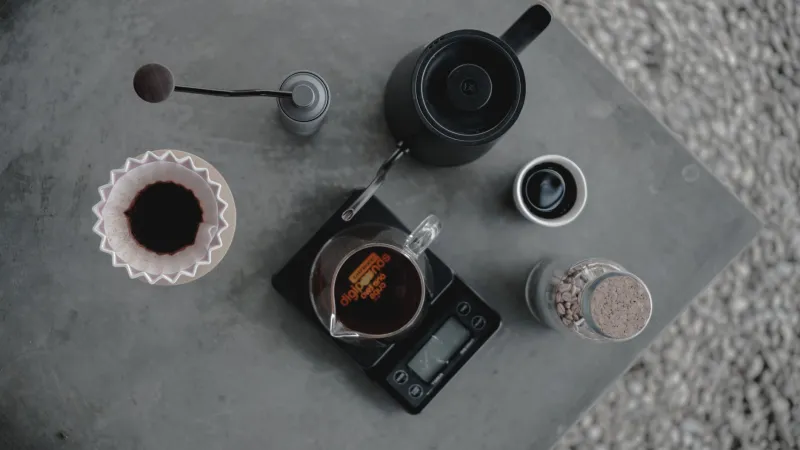
Pour-over is where home brewing starts to feel like a craft. You control the water temperature, pour rate, and bloom time — and those variables matter. Done well, pour-over produces the clearest, brightest, most complex cup of any method on this list. Done poorly, it produces something thin and sour or bitter and muddy.
The Hario V60 and Chemex are the two most common vessels. The Chemex uses thicker paper filters that remove more oils, resulting in a clean, almost tea-like clarity. The V60 is slightly more forgiving and faster to brew.
If you're willing to invest time in learning the technique — and there are excellent free tutorials on YouTube from channels like James Hoffmann — the payoff in cup quality is real. But this method genuinely rewards attention. It's not a set-it-and-forget-it situation.
Best for: Coffee enthusiasts who want to understand what they're drinking, people who find the process meditative, anyone who's already bought good beans and wants to do them justice.
4. Capsule Machine (Nespresso-Style) — Best for the Busy Household That Values Consistency
Time to first cup: 60–90 seconds Startup cost: $80–$200 for the machine; $0.70–$1.20 per pod Learning curve: None
Let's be upfront: capsule machines are not the audiophile's choice. The coffee is good — especially Nespresso's Vertuo and Original line — but it's not exceptional, and the ongoing cost of pods adds up faster than most people realize. A daily habit runs $25–$35 per month just in capsules.
What capsule machines do better than anything else on this list is deliver a consistent, no-thinking-required result in under two minutes. Press a button, get a coffee. Every time. No grinding, no measuring, no technique. If your household has multiple people with different preferences, or if your mornings are genuinely chaotic, that consistency is worth real money.
The environmental angle is worth acknowledging: capsule waste is significant, though Nespresso does offer a recycling program at their retail locations.
Best for: Busy households, people who want espresso-style drinks without the learning curve, anyone who values speed and consistency over maximum quality.
5. Manual Espresso (Moka Pot or AeroPress) — Best for the Apartment Dweller Who Wants Real Flavor Without the Machine
Time to first cup: 5–8 minutes Startup cost: $10–$35 (Moka Pot); $30–$45 (AeroPress) Learning curve: Low to moderate
Not everyone can justify a $400–$800 espresso machine, and honestly, not everyone needs to. The Moka Pot and AeroPress both produce concentrated, espresso-adjacent coffee that holds up beautifully in lattes and cappuccinos when paired with a handheld milk frother.
The Moka Pot is stovetop-based and produces a strong, slightly bitter brew that Italian households have been making for generations. It's inexpensive, nearly indestructible, and takes about five minutes once you know the technique. The AeroPress is more versatile — you can brew it like espresso, like a pour-over, or somewhere in between — and it's nearly impossible to make a truly bad cup once you've dialed in your ratios.
Neither produces true espresso (that requires 9 bars of pressure, which these don't achieve), but for the cost difference, they're remarkable value.
Best for: Apartment dwellers without counter space, travelers, budget-conscious coffee lovers, anyone who wants strong coffee without a significant investment.
So Which One Is Actually Right for You?
Here's the honest breakdown:
- You hate mornings and drink iced coffee: Cold Brew
- You like the ritual and want a rich hot cup: French Press
- You care deeply about flavor and will put in the work: Pour-Over
- You want speed, consistency, and zero effort: Capsule Machine
- You want strong coffee without spending much: Moka Pot or AeroPress
The best home coffee setup isn't the most expensive one or the most impressive one. It's the one you'll actually use every single day without dreading it. Start there.