Your Living Room Is Already a Gym: 5 Home Workout Setups That People Actually Stick With
Let's be honest. Somewhere between January 2nd and February 15th, most gym memberships quietly become monthly donations. The commute kills it. The parking kills it. The guy who doesn't wipe down the bench definitely kills it.
Home fitness sounds like the obvious fix — until you've bought a treadmill that now holds laundry, a set of resistance bands still in the packaging, and a yoga mat you've used twice. The fitness industry is very good at selling you things. It's less good at selling you things that actually get used.
This list isn't about the flashiest gear or the most Instagram-worthy setup. It's about five home workout configurations that real people in real homes — apartments included — can build, maintain, and actually return to week after week. Zero guesswork.
1. The Minimalist Resistance Setup (Under $150)
Best for: Apartment dwellers, beginners, anyone short on floor space
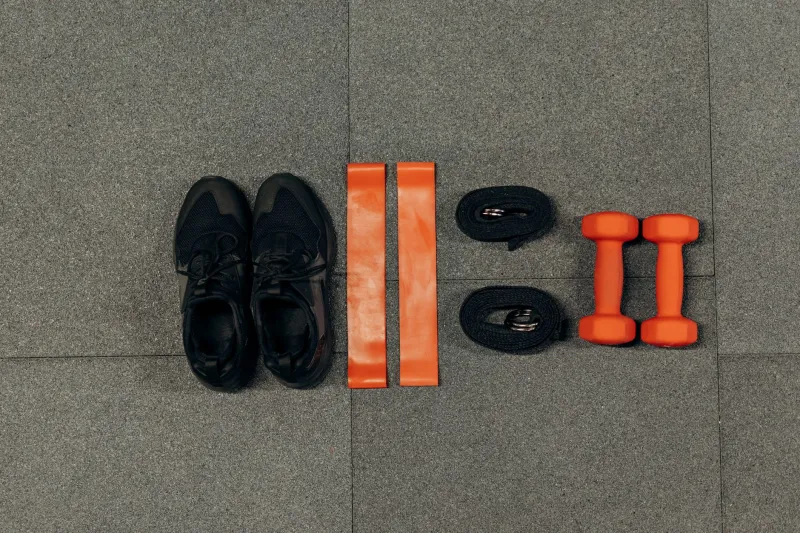
If you've got a 6x6 foot patch of open floor, you have enough room to build genuine strength. A set of loop resistance bands (look for a five-band kit with varying tensions), a single long resistance tube with handles, and a door anchor attachment covers pushing, pulling, squatting, and hinging — the four movement patterns that actually matter.
Why does this one stick? Because it lives in a drawer. You don't have to set it up, move furniture, or mentally prepare for it. The psychological barrier is basically zero. Grab a band, do 20 minutes before your morning shower, throw it back in the drawer.
Pair it with a free app like Nike Training Club or a cheap YouTube subscription to a trainer whose vibe you like, and you've got a genuinely complete beginner-to-intermediate program for less than a single month of most gym memberships.
The honest caveat: Resistance bands have a ceiling. Once you're training consistently for six-plus months, you'll want to add load. But most people never get there — and this setup is what gets you there.
2. The Adjustable Dumbbell Station (The $300–$500 Sweet Spot)
Best for: People who've been active before and want to pick up where they left off
Adjustable dumbbells changed the math on home lifting. A single pair of Bowflex SelectTech 552s or the PowerBlock Sport series replaces a full rack of weights in a footprint barely larger than a shoebox. You're talking 5 to 52 pounds of adjustable resistance that sits under a desk or in a closet corner.
Add a foldable flat/incline bench (they collapse to about the size of an ironing board) and you've replicated probably 70% of what a commercial gym offers for chest, shoulders, arms, and back. That's not a small number.
This setup tends to stick because it feels like real lifting. There's something about picking up an actual dumbbell that resistance bands just don't replicate psychologically. If that matters to you — and for a lot of people it does — this is your answer.
The honest caveat: Budget brands in this category are genuinely bad. The selector mechanism on cheap adjustable dumbbells fails fast. Stick to the established names here; it's worth the extra $80.
3. The Cardio-Plus-Core Floor Setup ($100–$200)
Best for: People who want to sweat without equipment bulk, or who primarily do cardio-based training
A high-density foam roller, a jump rope (get a weighted one — it's a different experience), a quality exercise mat thicker than the standard quarter-inch yoga mat, and a set of sliders. That's the whole kit.
Jump rope alone is one of the most underrated cardio tools in existence. Ten minutes of serious jump rope work is the aerobic equivalent of a 30-minute jog, and it costs $25. Add in foam rolling for recovery, slider exercises for core and lower body, and bodyweight circuits, and this is a surprisingly complete program.
The reason this setup sticks is sensory: it feels like a workout. You're breathing hard, you're sweating, and you're done in 25 minutes. For people with chaotic schedules — parents, shift workers, people who travel frequently — this compact kit can go in a suitcase.
The honest caveat: If building muscle mass is your primary goal, this won't get you there alone. It's a conditioning and maintenance tool, not a hypertrophy program.
4. The Pull-Up and Bodyweight Station ($200–$400)
Best for: Intermediate trainees who want functional strength without a full home gym
A wall-mounted or power-tower pull-up station is the sleeper pick on this list. Pull-ups and dips alone develop more upper body muscle than most people realize, and when you add in push-up variations, inverted rows, and hanging core work, you've got a complete upper-body program that requires zero weights.
Power towers (the freestanding kind with pull-up bar, dip bars, and push-up handles) run $150–$250 and take up roughly the space of a barstool. Wall-mounted pull-up bars are even more compact and start around $60, though you'll need to be comfortable drilling into a stud.
This setup tends to stick because it's always there. You walk past it, you do five pull-ups. That's how consistency actually builds — through proximity and low-threshold access, not through motivation.
The honest caveat: Pull-ups have a high barrier to entry for true beginners. Budget for a resistance band to assist until you build strength — it bridges the gap effectively.
5. The Compact Smart Fitness System ($500–$1,500)
Best for: People who've tried and failed with passive equipment and need external accountability
If you've got the budget and you know yourself well enough to admit that you need structure and variety to stay consistent, a guided smart fitness system is worth the investment. We're talking about compact all-in-ones like the Tempo Move (which uses your TV and a small weight set), the Bowflex Velocore bike, or even the more affordable Echelon Connect row and ride options.
These systems work not because the hardware is magic, but because they solve the what do I do today problem. Guided classes, progress tracking, and a community element all reduce the decision fatigue that kills most solo workout routines. When you don't have to think, you just do.
This category has gotten much more competitive in the last two years, and prices have dropped significantly. You no longer need to spend Peloton money to get a genuinely solid guided experience.
The honest caveat: This only works if you actually use the subscription. Factor that monthly cost in from the start — it's part of the real price.
The Actual Secret
None of these setups work if they're inconvenient. The single biggest predictor of whether someone uses home fitness equipment isn't quality, price, or even how much they enjoy working out — it's whether the equipment is accessible without effort.
Keep it out. Keep it visible. Keep it within arm's reach of wherever you already spend time. The gym you actually use beats the perfect gym you never visit every single time.
Start with one of these five. Pick the one that matches your space, your budget, and — most importantly — your actual personality, not your aspirational one. That's the whole game.